
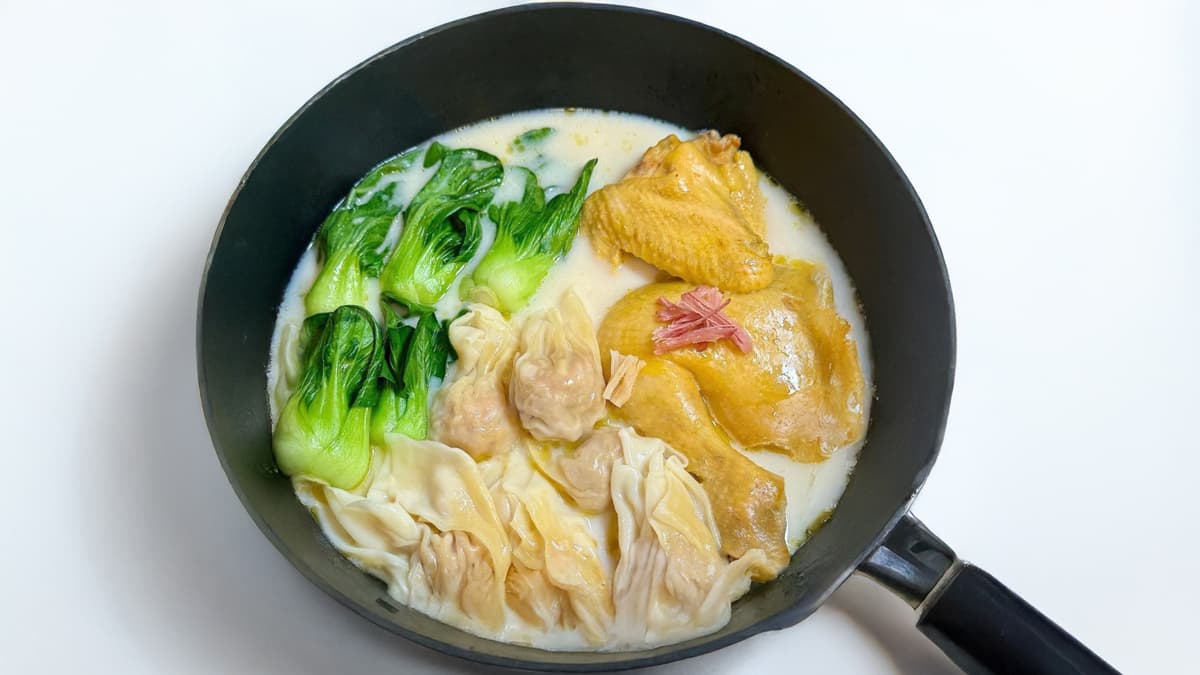
In the realm of Cantonese and Hong Kong home-style soups, claypot wonton chicken holds an unshakable place. This dish brings together a rich chicken broth, hand-crafted wontons, and the aroma of claypot braising, letting one savor both the soothing warmth of the soup and the tender, succulent chicken. This article delves into the method for claypot wonton chicken—from broth ratios, wonton filling, ingredient substitutions to braising techniques—fully deconstructing how to recreate tea house–level flavor at home.
This article will show you:
Broth system and ratios
The broth is the make-or-break core of claypot wonton chicken. Traditional Cantonese broths emphasize three layers: “sweetness, umami, and body.”
- Base broth: 1.2 kg old hen (cut into large pieces), 200 g lean pork, 300 g pork bones, with an approximate ratio of “chicken : bones : lean = 4:1:1.”
- Aromatics: 50 g Jinhua ham (thinly sliced) deepens savory fragrance and umami, key to a Jinhua ham–style wonton chicken.
- Water control: Use about 4 times the total weight of the ingredients so that after 2 hours of simmering, the broth remains concentrated.
Milky-white broth techniques
To achieve a milky-white broth, focus on two techniques:
- Hard sear for aroma: First blanch chicken and pork bones to remove scum, then quickly stir-fry over high heat with a little oil until lightly charred to release collagen and marrow.
- Vigorous rolling boil: Bring all ingredients with fresh water to a vigorous rolling boil for at least 15 minutes before reducing to a medium-low simmer; this helps the broth turn naturally opaque white.
Avoid sealing the lid tightly the whole time to prevent steam condensation from dulling the broth’s color.
Classic ingredients and substitutions
- Jinhua ham: A classic pairing that enhances aroma and balances chicken fat. If unavailable, use Yunnan ham, Italian Parma ham, or dried scallops as substitutes.
- Hen: Traditionally, an old hen is used for a stronger flavor and body. For smaller batches, silky fowl or local free-range chicken also works well.
- Wonton wrappers: Egg-based wrappers are traditional. If hard to source, knead thin sheets from bread flour and eggs for an even better texture.
Wonton filling formula and ratios
The soul of claypot wonton chicken lies in the wontons. Suggested ratios:
- 150 g minced pork (70/30 lean-to-fat)
- 80 g shrimp (smashed to boost umami)
- 50 g chopped water chestnuts (for crunch; corms of Eleocharis, sometimes called “bí qí,” can substitute)
- Minced scallion and ginger to taste
- Seasoning: 1 tsp salt, 1/2 tsp white pepper, 1 tsp sesame oil
- Beat the filling until tacky before wrapping.
This balance yields savory yet not greasy wontons.
Staggering the wontons and chicken
Soup-making follows “chicken first, then wontons”:
- The chicken should braise in the claypot for 1.5 hours first to release deep, mellow flavor.
- Do not add the wontons too early; add them about 10 minutes before serving, so they absorb the broth’s essence while keeping the wrappers intact and avoiding overcooking.
Master this timing and both wontons and chicken will shine in the same pot.
Keeping chicken tender with intact skin
- Cut size: Aim for 6–8 cm pieces; pieces that are too small will fall apart, while those that are too large won’t absorb flavor well.
- Salted water soak: Soak chicken pieces in lightly salted water for 20 minutes to help fibers retain moisture and tenderness.
- Pre-blanching: A quick hot blanch tightens skin and helps prevent tearing during long simmering.
Portions and small-pot version
For a typical family of 3–4:
- 1 chicken (about 1.2 kg)
- 15–18 wontons
- 50 g Jinhua ham
- 4 liters water
For a 2-person household, halve all ingredients and use a smaller claypot to better lock in heat control and aroma.
Variations and localization ideas
- Wellness version: Add goji berries, red dates, and Chinese yams for gentle sweetness and moisture support, ideal for autumn and winter.
- Seafood fusion: Try adding dried conpoy or scallops for a “land and sea” profile.
- Regional touches: In Hong Kong, it’s often paired with preserved Tianjin cabbage for a savory accent; in other parts of Guangdong, shiitake or bamboo fungus may be added for extra texture.
Conclusion
Claypot wonton chicken is a classic Cantonese dish that marries a robust broth, tender chicken, and fragrant wontons. By mastering broth ratios, heat control, and the proper timing between wontons and chicken, it’s entirely possible to recreate a deeply memorable, restaurant-worthy bowl at home.
Summary Table
Key links | Tips and Advice |
Soup base ratio | Chicken: bone: lean meat = 4:1:1, add Jinhua ham to enhance the flavor |
The secret of soup color | Stir-fry the bones and meat over high heat first, then boil over high heat for 15 minutes |
Classic ingredient substitutions | Jinhua ham → Yunnan ham or scallop; old hen → black-bone chicken or free-range chicken |
Wonton filling ratio | 150g pork, 80g shrimp, 50g water chestnuts |
The rhythm of sharing the pot | Cook the chicken first, then the wontons. Add the wontons 10 minutes before serving. |
Chicken skin is not broken | Soak in salt water, blanch in hot water, and cut into moderate pieces |
Small pot version | Reduce the ingredients by half and use a small casserole to lock in the aroma |
Localized variants | Add scallops, preserved vegetables, red dates, and more to create a variety of flavors. |
Frequently Asked Questions
Can wontons be wrapped in advance and frozen?
Yes, it is recommended to freeze them in a single layer after wrapping, and then store them in separate bags after they are frozen. They can be put into the pot directly without thawing when cooking.
If I don’t have a casserole dish, can I use another pot?
Yes, but a clay pot is better at retaining heat and can maintain an even temperature in a slow cooker. If you use a metal pot instead, you will need to carefully control the heat to prevent it from boiling over.
How to avoid soup being too greasy?
You can use a spoon to skim off the floating oil after the soup is cooked, or add more Jinhua ham when making the soup to balance the fat.
